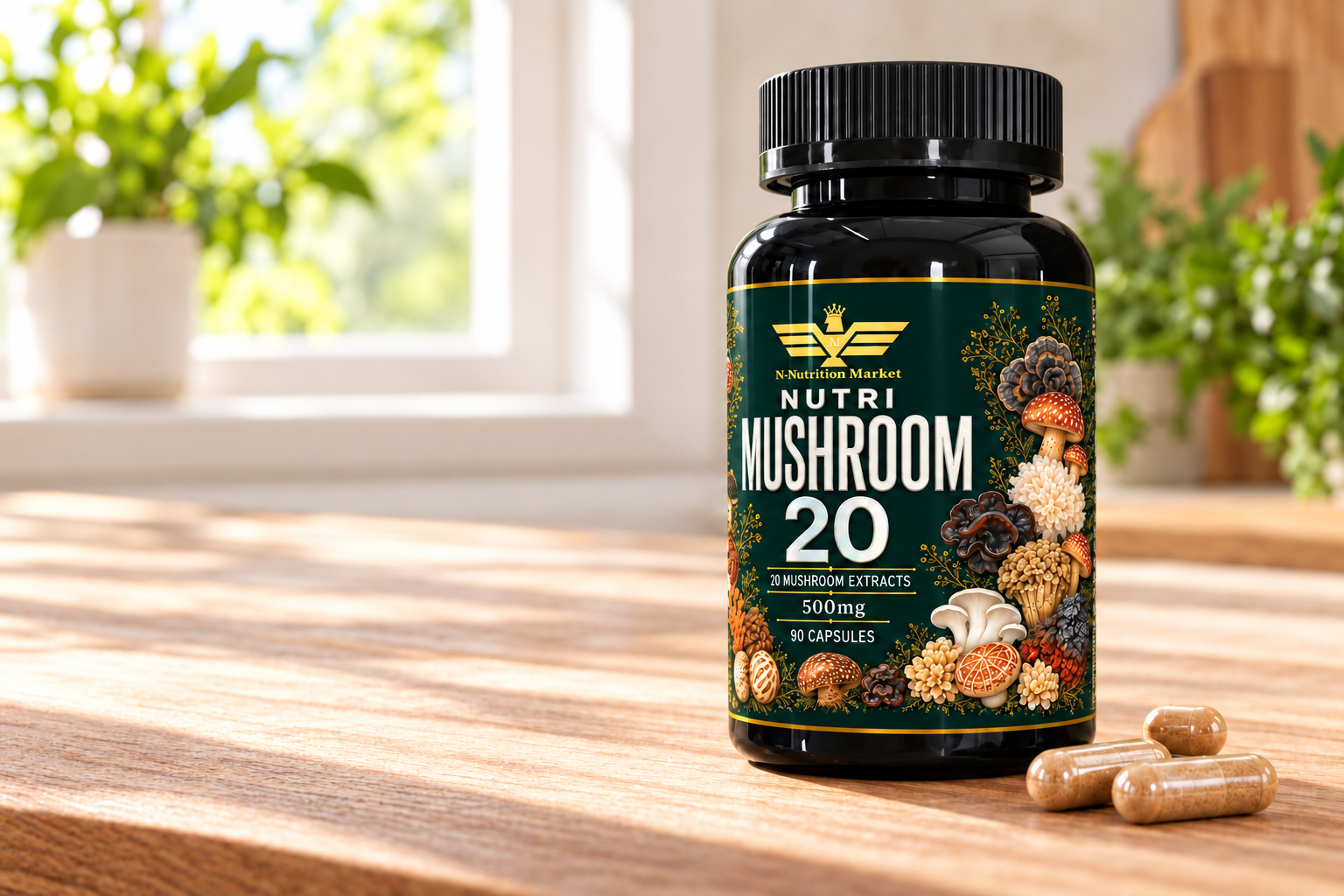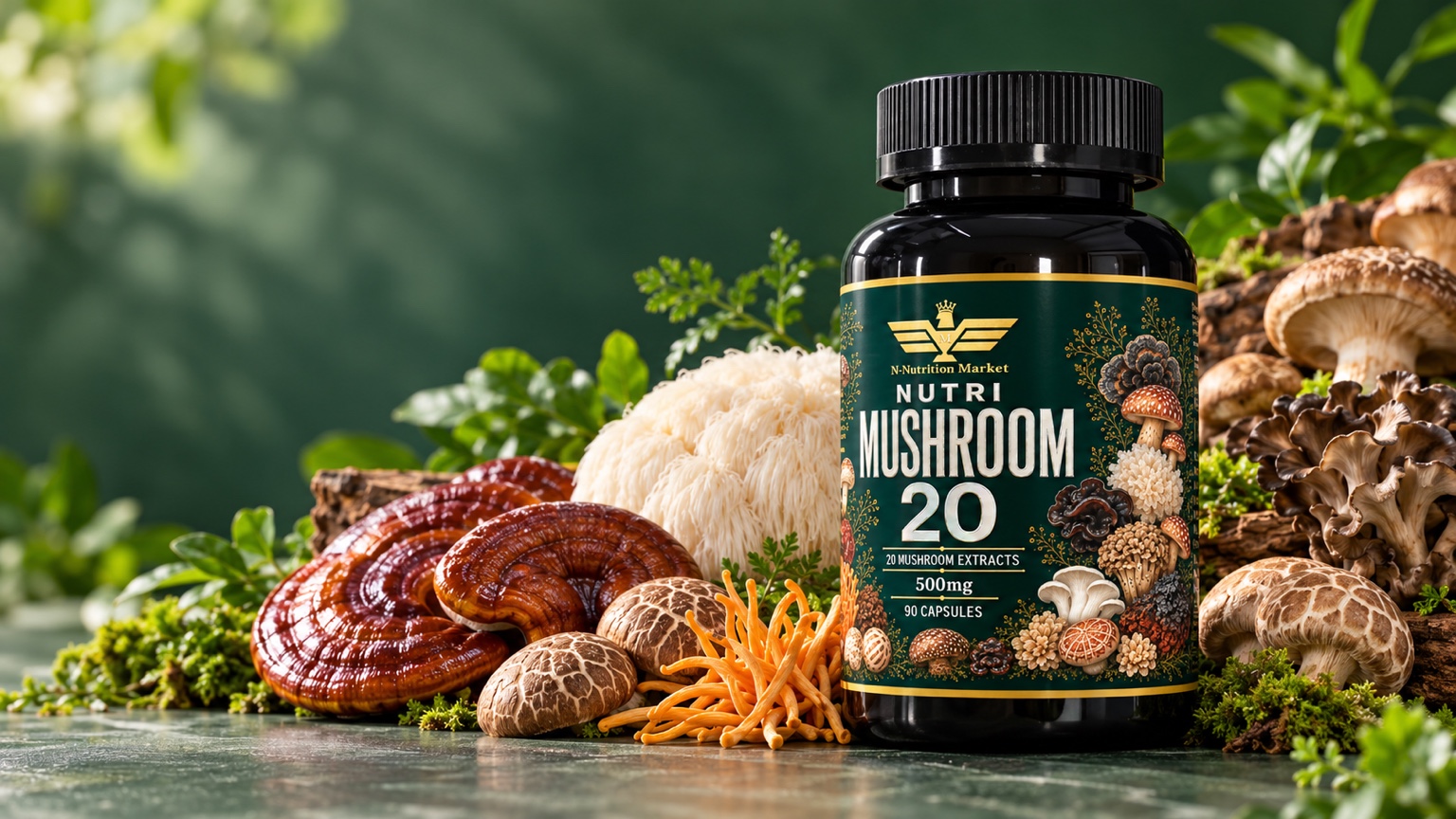
NUTRI
MUSHROOM 20
The Ultimate
20-Mushroom Synergy Complex for Total Body Regeneration
Product Overview
NUTRI MUSHROOM 20 is an elite
broad-spectrum nutraceutical formulation combining 20 of the worldβs most
potent functional, medicinal, and adaptogenic mushroom extracts. Engineered to
target human cellular biochemistry from multiple angles, this master blend
bridges traditional oriental medicine with modern biological science to deliver
dynamic support for immunity, cognitive performance, metabolic control, and
cellular repair.
Key Ingredients & Dosing
Matrix (Per Serving - 1000 mg Total Extract)
Core Benefits
1. Advanced Immune System
Modulation & Cellular Defense
2. Neuroprotection, Focus, and Cognitive Enhancement
3. Mitochondrial Energy, ATP Production & Stamina
4. Systemic Anti-Inflammatory & Antioxidant Shield
5. Metabolic, Cardiovascular & Glycemic Control
Applications: Symptoms,
Conditions & Traditional Indications
Note: Functional mushrooms act as dietary and
nutraceutical support to restore systemic homeostasis and complement
therapeutic protocols.
|
Category |
Symptoms & Discomforts |
Health Conditions / Support Areas |
Traditional / Ethnobotanical Uses |
|
Immune & Oncological Support |
Chronic fatigue, frequent colds/flu, slow healing, systemic inflammation |
Immune deficiency, adjunct support during anti-tumor therapy side-effects |
Traditional Tonics for
vitality and long life (Reishi, Turkey Tail, Chaga) |
|
Neurological
& Brain Health |
Brain fog, lack of focus, memory slips, mild anxiety, poor stress
tolerance |
Cognitive
decline, neurodegenerative prevention, neuropathy support |
Mental clarity, meditation
focus, and memory preservation (Lion's Mane) |
|
Metabolic
& Cardiovascular |
High blood pressure, high blood sugar spikes, elevated LDL cholesterol |
Metabolic
syndrome, Type 2 diabetes management, hyperlipidemia, hypertension |
Blood purification,
circulation enhancement (Black Fungus, Maitake) |
|
Respiratory
& Lung Health |
Shortness of breath, shallow breathing, lingering cough, wheezing |
Chronic
bronchitis, asthma support, respiratory allergies |
Lung essence replenishment
and endurance building (Cordyceps, Tiger Milk) |
|
Hepatic
& Renal Detoxification |
Fluid retention, sluggish liver digestion, exposure to environmental
toxins |
Fatty liver disease, hepatic inflammation, fluid balance issues |
Liver protection, hangover
relief, renal fluid regulation (Poria cocos, Antrodia, Polyporus) |
To
build a commanding, globally competitive profile for N-NUTRITION & MARKET, NUTRI MUSHROOM 20 can be strategically positioned to
address a broad spectrum of health conditions. This framework integrates
traditional phytotherapy, real-world user testimonies, and modern peer-reviewed
mycological science (including targeted oncology research).
Β·
Conditions Addressed:
o Gastric
(Stomach) Cancers
o Colorectal
Cancers
o Breast
Cancers
o Esophageal
Cancer
o Non-Small
Cell Lung Cancer
Β·
Key
Mushrooms Involved:
Turkey Tail (Trametes
versicolor), Reishi (Ganoderma
lucidum), Maitake (Grifola
frondosa).
Β·
Scientific & Traditional Rationale:
o
Specific
fungal beta-glucans and polysaccharide fractions (such as protein-bound
polysaccharides akin to PSK and PSP derived from Turkey Tail) have a long
history of clinical evaluation in Asian oncology (Japan, China, and Korea).
o
Mechanism: They act as biological response
modifiers (BRMs) that stimulate immune effector cells, including Natural Killer
(NK) cells, cytotoxic T-lymphocytes, and interleukin pathways to help mitigate
chemotherapy-induced bone marrow suppression, reduce fatigue, and support
overall quality of life during conventional oncological therapies.
Β·
Conditions Addressed:
o
Early-Stage
Cognitive Decline & Age-Related Memory Impairment
o Mild
Cognitive Impairment (MCI)
o
Brain
Fog, Chronic Mental Fatigue, and Neuronal Stress
o Peripheral
Neuropathy & Nerve Injury Support
Β·
Key
Mushrooms Involved:
Lion's Mane (Hericium
erinaceus), Armillaria mellea
Β·
Scientific & Traditional Rationale:
o
Lion's
Mane contains unique low-molecular-weight compounds called hericenones and
erinacines that cross the blood-brain barrier
o
Mechanism: These bioactives stimulate the
biosynthesis of Nerve Growth Factor (NGF) and Brain-Derived Neurotrophic Factor
(BDNF), promoting neurogenesis, myelin sheath regeneration, and synaptic
plasticity.
Β·
Conditions Addressed:
o Type
2 Diabetes Mellitus & Insulin Resistance
o
Hyperlipidemia
(High Cholesterol & Elevated LDL)
o Hypertension
(High Blood Pressure)
o Metabolic
Syndrome
Β·
Key
Mushrooms Involved:
Maitake (Grifola frondosa),
Reishi (Ganoderma lucidum),
Chaga (Inonotus obliquus),
Shiitake (Lentinula
edodes), Black Fungus
Β·
Scientific & Traditional Rationale:
o
Mechanism: Rich in alpha- and beta-glucans as
well as specialized sterols that inhibit hepatic HMG-CoA reductase (modulating
cholesterol synthesis) and improve peripheral insulin receptor sensitivity,
assisting in cellular glucose utilization and systemic vascular health.
Β·
Conditions Addressed:
o
Chronic
Immune Deficiency & Recurrent Infections (Frequent Colds, Flu, and Viral
Susceptibility)
o Chronic
Systemic Inflammation
o
Mild
to Moderate Arthritis & Joint Inflammatory Discomforts
o Allergic
Rhinitis & Upper Respiratory Inflammation
Β·
Key
Mushrooms Involved:
Reishi (Ganoderma lucidum),
Turkey Tail (Trametes
versicolor), Agaricus blazei, Schizophyllum commune, Antrodia camphorata
Β·
Scientific & Traditional Rationale:
o
Mechanism: Fungal polysaccharides modulate
macrophage activation and balance T-helper cell responses (Th1/Th2 balance),
suppressing excessive pro-inflammatory cytokines (such as TNF-alpha and IL-6)
while boosting host pathogen defense mechanisms.
Β·
Conditions Addressed:
o Chronic
Bronchitis & Asthmatic Tendencies
o
Shortness
of Breath & Low Exercise Endurance
o Post-Viral
Pulmonary Fatigue
Β·
Key
Mushrooms Involved:
Cordyceps (Cordyceps
militaris & CS-4),
Tiger Milk Mushroom (Lignosus
rhinocerotis)
Β·
Scientific & Traditional Rationale:
o
Mechanism: Cordycepin and adenosine analogues
optimize cellular oxygen utilization ($\text{VO}_2$ max), promote bronchial
smooth muscle relaxation, and enhance pulmonary gas exchange, matching
centuries of traditional use by high-altitude Himalayan populations.
Β·
Conditions Addressed:
o
Non-Alcoholic
Fatty Liver Disease (NAFLD)
o Sluggish
Hepatic Detoxification Pathways
o Renal
Fluid Retention & Edema
Β·
Key
Mushrooms Involved:
Antrodia camphorata, Poria cocos (Wolfiporia cocos), Polyporus umbellatus
Β·
Scientific & Traditional Rationale:
o
Mechanism: Triterpenoids in Antrodia provide
potent hepatocyte protection against toxins, while Poria and Polyporus exhibit
natural aquaretic properties, encouraging healthy renal clearance and
electrolyte balance without depleting essential potassium.
Β·
Conditions Addressed:
o
Premature
Skin Aging & Loss of Elasticity
o Chronic
Oxidative Stress Damage
Β·
Key
Mushrooms Involved:
Tremella fuciformis (Snow Mushroom), Chaga (Inonotus obliquus)
Β·
Scientific & Traditional Rationale:
o
Mechanism: Tremella polysaccharides possess an
exceptional water-holding capacity (surpassing hyaluronic acid in laboratory
models) while Chaga provides an unmatched concentration of Superoxide Dismutase
(SOD), neutralizing free radicals at the cellular level.
Suggested Usage
NUTRI
MUSHROOM 20
The Ultimate
20-Mushroom Synergy Complex for Total Body Regeneration
Product Overview
NUTRI MUSHROOM 20 is an elite
broad-spectrum nutraceutical formulation combining 20 of the worldβs most
potent functional, medicinal, and adaptogenic mushroom extracts. Engineered to
target human cellular biochemistry from multiple angles, this master blend
bridges traditional oriental medicine with modern biological science to deliver
dynamic support for immunity, cognitive performance, metabolic control, and
cellular repair.
Key Ingredients & Dosing
Matrix (Per Serving - 1000 mg Total Extract)
Core Benefits
1. Advanced Immune System
Modulation & Cellular Defense
2. Neuroprotection, Focus, and Cognitive Enhancement
3. Mitochondrial Energy, ATP Production & Stamina
4. Systemic Anti-Inflammatory & Antioxidant Shield
5. Metabolic, Cardiovascular & Glycemic Control
Applications: Symptoms,
Conditions & Traditional Indications
Note: Functional mushrooms act as dietary and
nutraceutical support to restore systemic homeostasis and complement
therapeutic protocols.
|
Category |
Symptoms & Discomforts |
Health Conditions / Support Areas |
Traditional / Ethnobotanical Uses |
|
Immune & Oncological Support |
Chronic fatigue, frequent colds/flu, slow healing, systemic inflammation |
Immune deficiency, adjunct support during anti-tumor therapy side-effects |
Traditional Tonics for
vitality and long life (Reishi, Turkey Tail, Chaga) |
|
Neurological
& Brain Health |
Brain fog, lack of focus, memory slips, mild anxiety, poor stress
tolerance |
Cognitive
decline, neurodegenerative prevention, neuropathy support |
Mental clarity, meditation
focus, and memory preservation (Lion's Mane) |
|
Metabolic
& Cardiovascular |
High blood pressure, high blood sugar spikes, elevated LDL cholesterol |
Metabolic
syndrome, Type 2 diabetes management, hyperlipidemia, hypertension |
Blood purification,
circulation enhancement (Black Fungus, Maitake) |
|
Respiratory
& Lung Health |
Shortness of breath, shallow breathing, lingering cough, wheezing |
Chronic
bronchitis, asthma support, respiratory allergies |
Lung essence replenishment
and endurance building (Cordyceps, Tiger Milk) |
|
Hepatic
& Renal Detoxification |
Fluid retention, sluggish liver digestion, exposure to environmental
toxins |
Fatty liver disease, hepatic inflammation, fluid balance issues |
Liver protection, hangover
relief, renal fluid regulation (Poria cocos, Antrodia, Polyporus) |
To
build a commanding, globally competitive profile for N-NUTRITION & MARKET, NUTRI MUSHROOM 20 can be strategically positioned to
address a broad spectrum of health conditions. This framework integrates
traditional phytotherapy, real-world user testimonies, and modern peer-reviewed
mycological science (including targeted oncology research).
Β·
Conditions Addressed:
o Gastric
(Stomach) Cancers
o Colorectal
Cancers
o Breast
Cancers
o Esophageal
Cancer
o Non-Small
Cell Lung Cancer
Β·
Key
Mushrooms Involved:
Turkey Tail (Trametes
versicolor), Reishi (Ganoderma
lucidum), Maitake (Grifola
frondosa).
Β·
Scientific & Traditional Rationale:
o
Specific
fungal beta-glucans and polysaccharide fractions (such as protein-bound
polysaccharides akin to PSK and PSP derived from Turkey Tail) have a long
history of clinical evaluation in Asian oncology (Japan, China, and Korea).
o
Mechanism: They act as biological response
modifiers (BRMs) that stimulate immune effector cells, including Natural Killer
(NK) cells, cytotoxic T-lymphocytes, and interleukin pathways to help mitigate
chemotherapy-induced bone marrow suppression, reduce fatigue, and support
overall quality of life during conventional oncological therapies.
Β·
Conditions Addressed:
o
Early-Stage
Cognitive Decline & Age-Related Memory Impairment
o Mild
Cognitive Impairment (MCI)
o
Brain
Fog, Chronic Mental Fatigue, and Neuronal Stress
o Peripheral
Neuropathy & Nerve Injury Support
Β·
Key
Mushrooms Involved:
Lion's Mane (Hericium
erinaceus), Armillaria mellea
Β·
Scientific & Traditional Rationale:
o
Lion's
Mane contains unique low-molecular-weight compounds called hericenones and
erinacines that cross the blood-brain barrier
o
Mechanism: These bioactives stimulate the
biosynthesis of Nerve Growth Factor (NGF) and Brain-Derived Neurotrophic Factor
(BDNF), promoting neurogenesis, myelin sheath regeneration, and synaptic
plasticity.
Β·
Conditions Addressed:
o Type
2 Diabetes Mellitus & Insulin Resistance
o
Hyperlipidemia
(High Cholesterol & Elevated LDL)
o Hypertension
(High Blood Pressure)
o Metabolic
Syndrome
Β·
Key
Mushrooms Involved:
Maitake (Grifola frondosa),
Reishi (Ganoderma lucidum),
Chaga (Inonotus obliquus),
Shiitake (Lentinula
edodes), Black Fungus
Β·
Scientific & Traditional Rationale:
o
Mechanism: Rich in alpha- and beta-glucans as
well as specialized sterols that inhibit hepatic HMG-CoA reductase (modulating
cholesterol synthesis) and improve peripheral insulin receptor sensitivity,
assisting in cellular glucose utilization and systemic vascular health.
Β·
Conditions Addressed:
o
Chronic
Immune Deficiency & Recurrent Infections (Frequent Colds, Flu, and Viral
Susceptibility)
o Chronic
Systemic Inflammation
o
Mild
to Moderate Arthritis & Joint Inflammatory Discomforts
o Allergic
Rhinitis & Upper Respiratory Inflammation
Β·
Key
Mushrooms Involved:
Reishi (Ganoderma lucidum),
Turkey Tail (Trametes
versicolor), Agaricus blazei, Schizophyllum commune, Antrodia camphorata
Β·
Scientific & Traditional Rationale:
o
Mechanism: Fungal polysaccharides modulate
macrophage activation and balance T-helper cell responses (Th1/Th2 balance),
suppressing excessive pro-inflammatory cytokines (such as TNF-alpha and IL-6)
while boosting host pathogen defense mechanisms.
Β·
Conditions Addressed:
o Chronic
Bronchitis & Asthmatic Tendencies
o
Shortness
of Breath & Low Exercise Endurance
o Post-Viral
Pulmonary Fatigue
Β·
Key
Mushrooms Involved:
Cordyceps (Cordyceps
militaris & CS-4),
Tiger Milk Mushroom (Lignosus
rhinocerotis)
Β·
Scientific & Traditional Rationale:
o
Mechanism: Cordycepin and adenosine analogues
optimize cellular oxygen utilization ($\text{VO}_2$ max), promote bronchial
smooth muscle relaxation, and enhance pulmonary gas exchange, matching
centuries of traditional use by high-altitude Himalayan populations.
Β·
Conditions Addressed:
o
Non-Alcoholic
Fatty Liver Disease (NAFLD)
o Sluggish
Hepatic Detoxification Pathways
o Renal
Fluid Retention & Edema
Β·
Key
Mushrooms Involved:
Antrodia camphorata, Poria cocos (Wolfiporia cocos), Polyporus umbellatus
Β·
Scientific & Traditional Rationale:
o
Mechanism: Triterpenoids in Antrodia provide
potent hepatocyte protection against toxins, while Poria and Polyporus exhibit
natural aquaretic properties, encouraging healthy renal clearance and
electrolyte balance without depleting essential potassium.
Β·
Conditions Addressed:
o
Premature
Skin Aging & Loss of Elasticity
o Chronic
Oxidative Stress Damage
Β·
Key
Mushrooms Involved:
Tremella fuciformis (Snow Mushroom), Chaga (Inonotus obliquus)
Β·
Scientific & Traditional Rationale:
o
Mechanism: Tremella polysaccharides possess an
exceptional water-holding capacity (surpassing hyaluronic acid in laboratory
models) while Chaga provides an unmatched concentration of Superoxide Dismutase
(SOD), neutralizing free radicals at the cellular level.
Suggested Usage